ETCOM modernized how Amazon authorizes, validates, and deploys tax rules at global scale.
I led the end-to-end redesign of critical authoring and deployment workflows, transforming a
fragile, Excel-driven process into a governed, auditable platform supporting 800,000+ rules
across 19 services.
Over a year-long engagement on the Tacoma platform, I partnered closely with Product,
Engineering,
and Tax Operations to redesign how tax rules move from creation to production at scale.
I joined during the final pre-launch phase, where core functionality was largely in place, and
focused on strengthening the tax rule authoring and deployment experience. I identified critical
workflow gaps that posed adoption and usability risks, and worked with cross-functional partners
to resolve them ahead of launch.
I led a 4-month end-to-end redesign of the deployment workflow, spanning:
User research and walkthroughs
Workflow modeling and validation
Design delivery and launch adoption
Post-launch, I continued working directly with users to understand how teams were transitioning
from Excel-based authoring to ETCOM. I synthesized insights across teams, surfaced mental-model
mismatches, and translated findings into a prioritized improvement backlog presented to
leadership,
ensuring the platform evolved with real operational needs.
Case Study — Deep Dive
The Problem: A Fragile Legacy System
Amazon’s legacy Rule Management System, built in 2012, had evolved into a high-risk operational
bottleneck that managed 800,000+ tax rules across 19 services and processing nearly 13 trillion
calculations every month.
Rule Authoring
(Excel-based)
Manual editsNo dependencies
→
Coordination
(Email / Slack)
Ownership unclearVersion conflicts
→
Validation
(Late-stage)
Errors discoveredtoo late
→
Production
(High Blast Radius)
One mistake affectsmillions of users
Despite this scale, tax rules were still:
Authored and edited manually in Excel
Coordinated through emails and Slack threads
Deployed via fragmented, opaque workflows
At this volume, small mistakes had massive consequences.
In one instance, a single rule issue halted Prime Now orders across four EU markets for several
hours. The system was reliable only as long as nothing went wrong, but this was no longer
acceptable.
Key Users
Key Users & Accountability
Tax Rule Author
Business User
Primary responsibility
Create and maintain tax rules that directly impact production calculations.
Core pain
Manual, error-prone authoring with limited visibility into dependencies and
downstream impact.
Risk they carry
A single mistake can cause incorrect tax calculations or customer-facing outages.
What success looks like
Confidently author rules with clear validation, visibility, and safe deployment.
Tax Rule Deployment Owner
Operations
Primary responsibility
Validate, approve, and deploy tax rules across regions and services.
Core pain
Fragmented workflows, manual coordination, and poor visibility into deployment
readiness.
Risk they carry
Failed or partial deployments that disrupt production and trigger compliance
incidents.
What success looks like
Predictable, auditable releases with real-time status and safe rollback options.
Solution: What is ETCOM?
ETCOM modernizes how Amazon’s tax teams create and manage tax rules. Previously, tax
analysts
had to download Excel files, make changes offline, and re-upload them often juggling Slack
threads to coordinate who was editing what. It was slow, error-prone, and mentally
exhausting.
With ETCOM rule authoring happens directly on the platform, where updates are instantly
visible
to everyone.
Each change is tracked, clearly showing who made what edits, which has greatly improved
transparency and collaboration. Testing and deployment are now streamlined, saving hundreds
of
manual hours. The next phase,launching this December introduces AI-generated rule authoring
from
legislation, further accelerating accuracy and efficiency.
Key Design Decisions
📦
Snapshot-Based Deployments
Decision
Deploy rules as explicit snapshots instead of individual rule
releases.
Why
Prevent partial or inconsistent production states.
Outcome
Predictable releases, safer rollbacks, and fewer production
incidents.
☑️
Guided Deployment Flow
Decision
Designed a step-based deployment experience instead of exposing
raw engineering pipelines.
Why
Business users lacked visibility and confidence in
developer-centric tools.
Outcome
Faster adoption and reduced dependency on engineering support.
👁️
Centralized Ownership & Visibility
Decision
Centralized deployment status, ownership, and audit history in
one place.
Why
Fragmented ownership increased risk and slowed incident
response.
Outcome
Clear accountability, faster issue resolution, and compliance
confidence.
Rulefile Deployment
Reimagining the Workflow
Before: Manual & Fragmented
Rule changes lived across spreadsheets and services.
Teams coordinated changes through email and Slack.
Validation happened late, often after bundling.
Deployments were slow and unpredictable.
After: Unified & Automated
Rules authored and managed in one platform.
Ownership, status, and readiness visible in real time.
Validation and testing embedded in the workflow.
Releases were predictable, auditable, and safer.
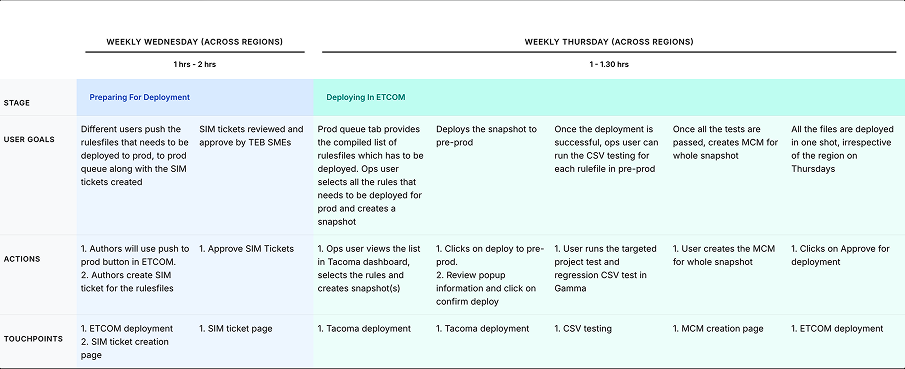
User Journey
Etcom User Journey
Click to Expand View
Weekly Wednesday (Across Regions)
1 hrs - 2 hrs
Weekly Thursday (Across Regions)
1 - 1.30 hrs
Stage
Preparing for Deployment
Deploying in ETCOM
User Goals
Different users push the rulesfiles that needs to be deployed to prod, to prod
queue
along with the SIM tickets created
SIM tickets reviewed and approve by TEB SMEs
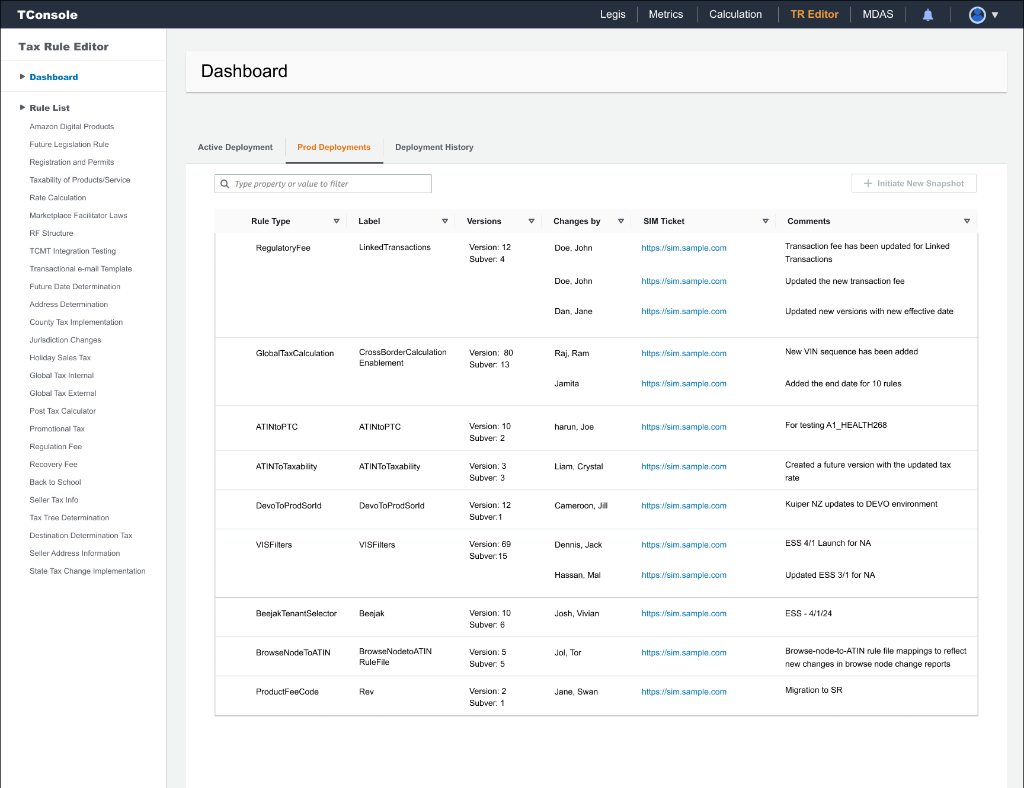
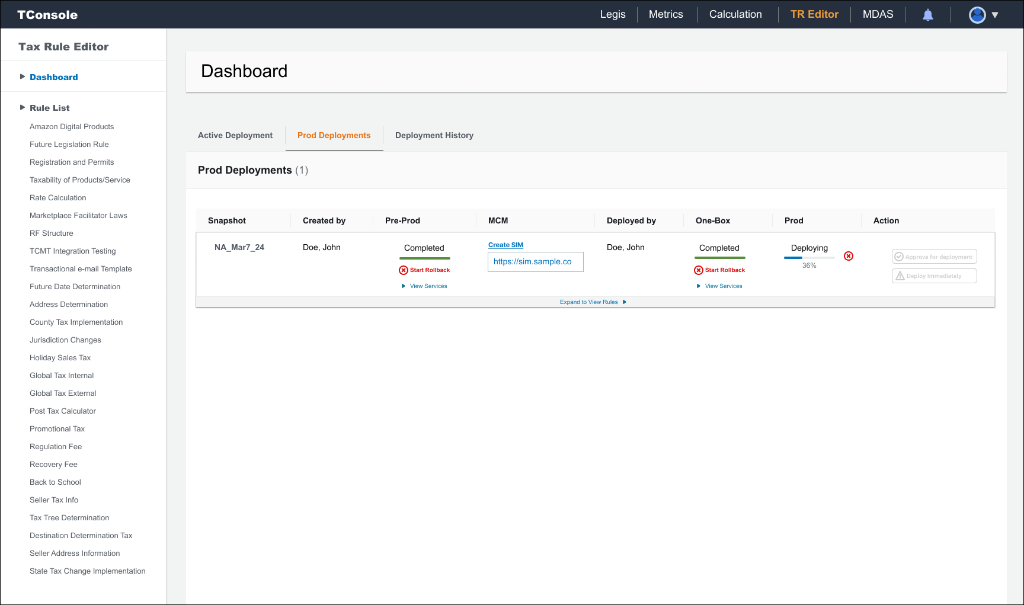
Prod queue tab provides the compiled list of rulesfiles which has to be deployed.
Ops
user selects all the rules that needs to be deployed for prod and creates a
snapshot
Deploys the snapshot to pre-prod
Once the deployment is successful, ops user can run the CSV testing for each
rulefile
in pre-prod
Once all the tests are passed, creates MCM for whole snapshot
All the files are deployed in one shot, irrespective of the region on Thursdays
Actions
1. Authors will use push to prod button in ETCOM. 2. Authors create SIM ticket
for
the rulesfiles
1. Approve SIM Tickets
1. Ops user views the list in Tacoma dashboard, selects the rules and creates
snapshot(s)
1. Clicks on deploy to pre-prod. 2. Review popup information and click on
confirm
deploy
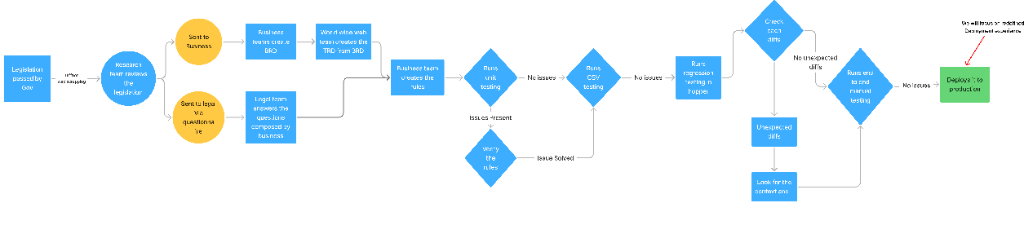
1. User runs the targeted project test and regression CSV test in Gamma
1. User creates the MCM for whole snapshot
1. Clicks on Approve for deployment
Touchpoints
1. ETCOM deployment 2. SIM ticket creation page
1. SIM ticket page
1. Tacoma deployment
1. Tacoma deployment
1. CSV testing
1. MCM creation page
1. ETCOM deployment
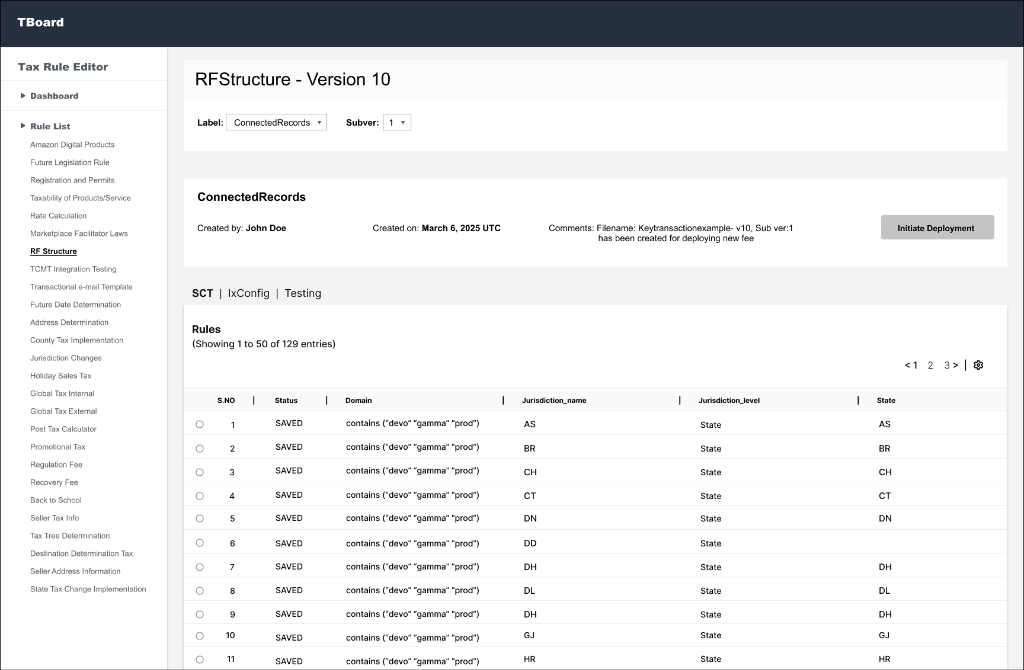
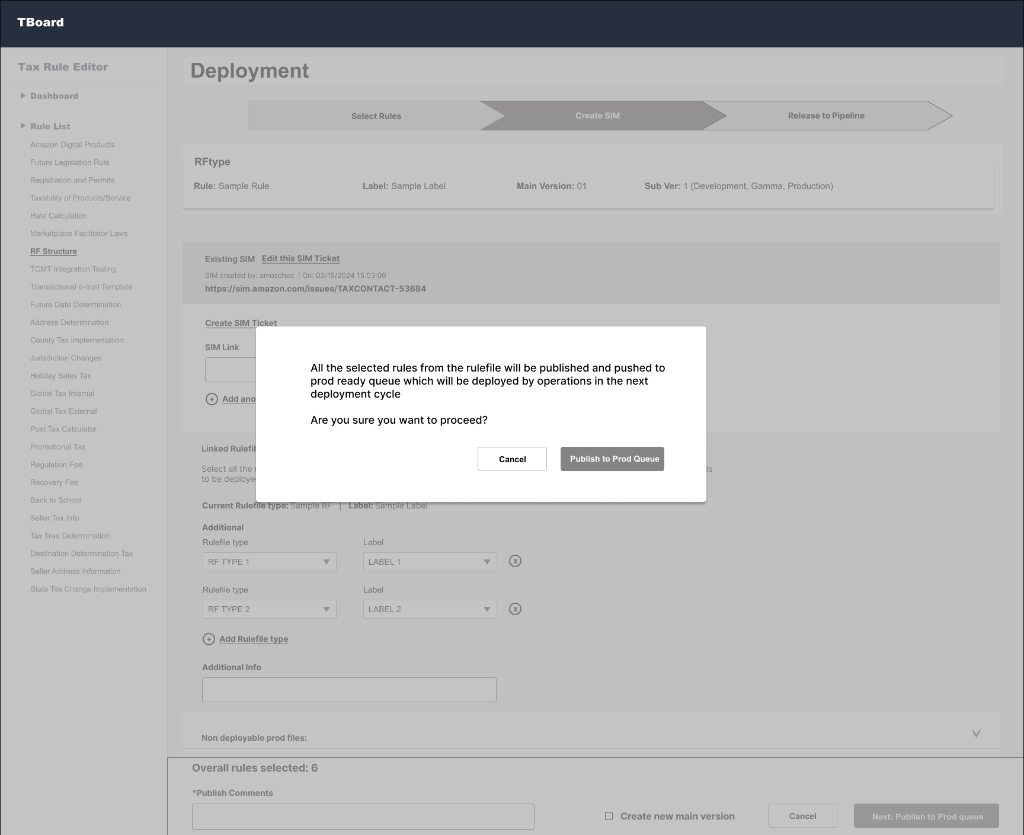
Wireframes
Design Evolution
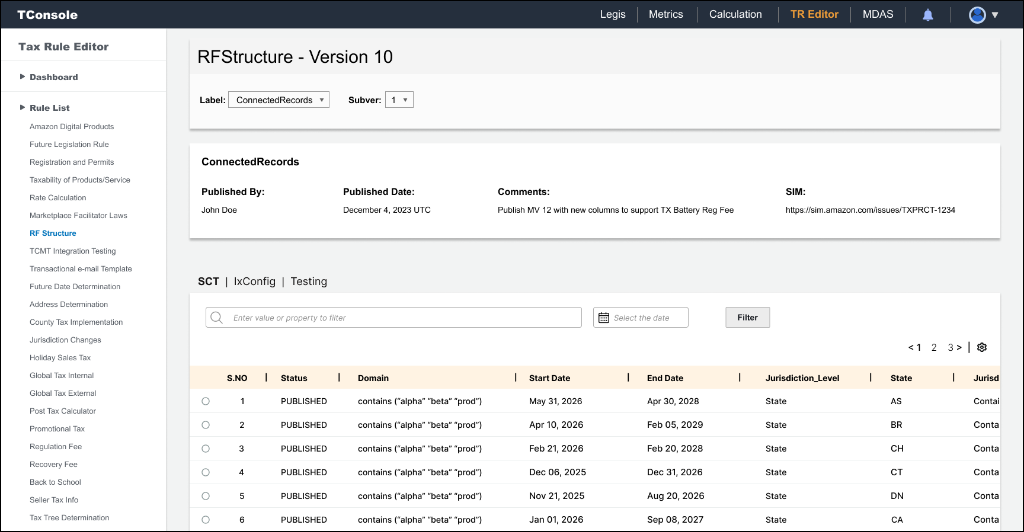
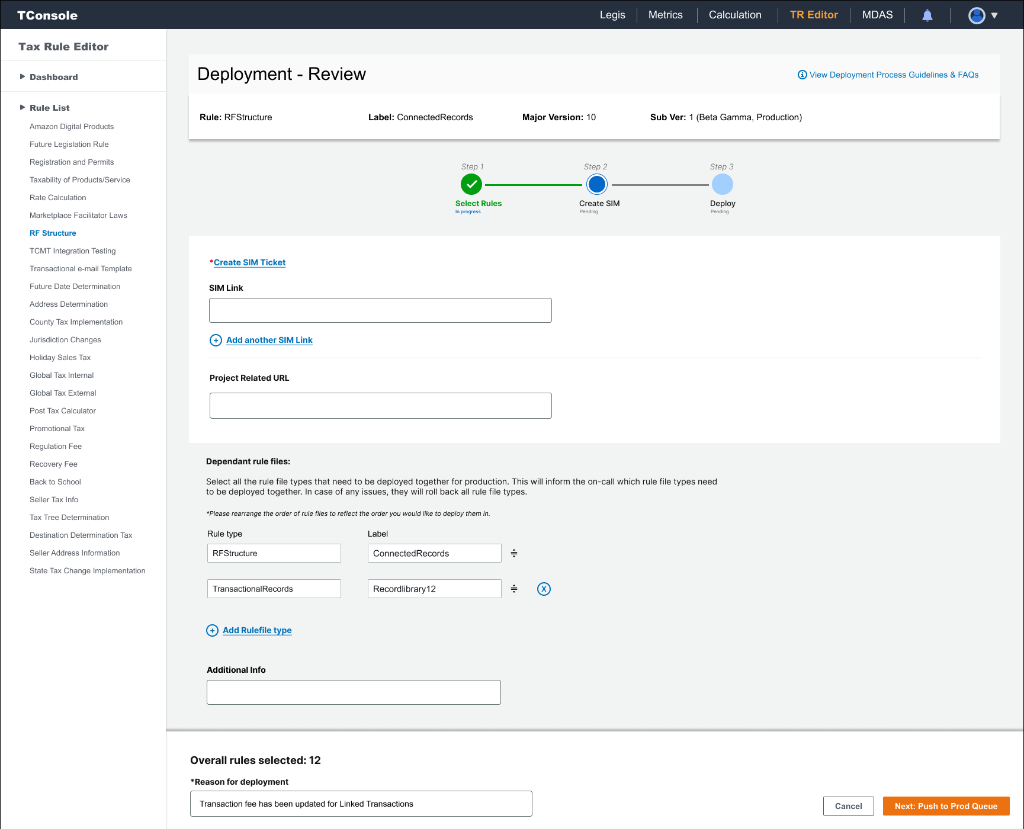
High-fidelity wireframes visualizing the new consolidated workflows.
Click to Expand View
Click to Expand View
Click to Expand View
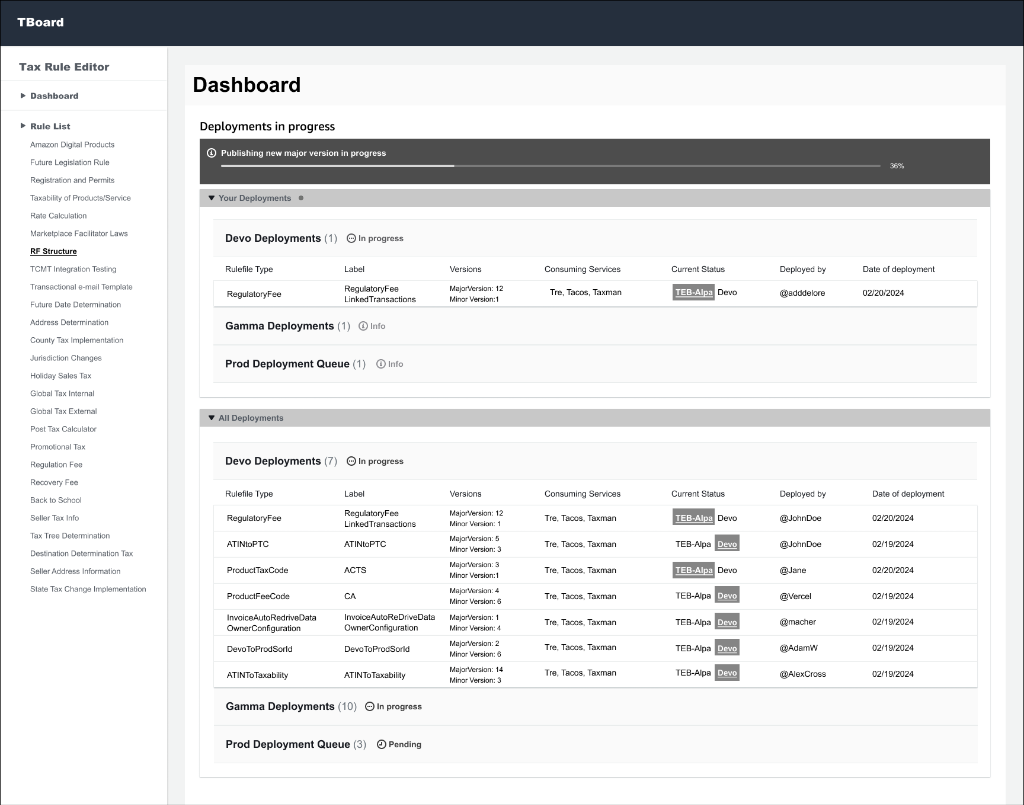
Before & After
Legacy vs ETCOM
Legacy System
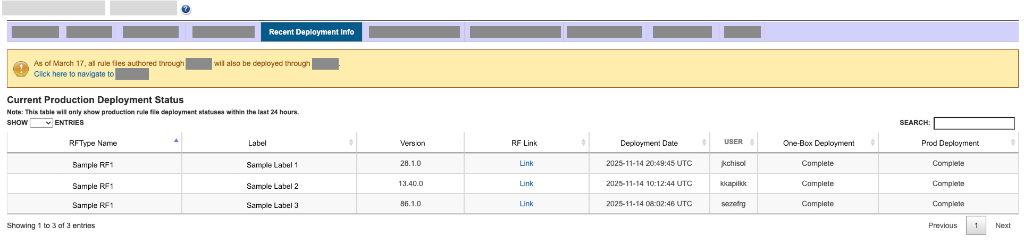
The legacy system does not have step by step guidance or tracking mechanism to help users
update on the progress.
Click to Expand View
ETCOM
ETCOM provides easy rule(s) selection mechanism.
Click to Expand View
Click to Expand View
Click to Expand View
Click to Expand View
Overcoming Hurdles
Implementation Challenges
Constraint
Engineering preference for reusing the existing code deployment
pipeline UI
Risk
Non-technical users lacked visibility and deployment confidence
Approach
Live walkthroughs paired with quantified usability and error risk
analysis
Outcome
Alignment on a simplified, guided deployment experience
Validation
Customer Walkthrough Sessions
To validate adoption and de-risk rollout, we conducted structured
walkthroughs with end users before and after launch.
👥3 focus groups · 37 participants across Content
Authors and Tax Engine Operations, with Approvers and Service Owners included for
cross-functional visibility.
🖥️Hands-on walkthroughs of the redesigned deployment flow
✨Feedback directly shaped final interaction patterns, validation
steps, and tracking
Feedback
What People Are Saying
“ETCOM turned my ‘Thursday-palooza’ into a ‘One-Hit
Wonder.’ Now it’s just one validation, one click, one success email—and I get an
hour of my day back. That’s not just time saved, that’s freedom.”
Tim RobbinsTax Engine Manager (Operations)
“Publishing Gamma rules is now straightforward. ETCOM
automatically deploys the right file version, removing extra manual steps.”
Macy JohnsonSr. Product Manager
“This new testing strategy builds real
resilience—preventing errors before release and strengthening customer trust.”
John MasonDirector of Product Management
“Deployments run smoothly. I’d love to see consuming host
visibility added back, but the new workflow already improves accuracy and
confidence.”
Tom ChangSoftware Dev Engineer II
Outcome
A Reliable Foundation for Scale
ETCOM transformed tax rule deployment from a fragile, manual process into a reliable,
governed platform operating at global scale.
Beyond efficiency gains, the work reshaped how teams reason about readiness, ownership, and
the balance between speed and compliance.
Most importantly, ETCOM established a foundation where automation could be trusted because
governance was built into the system, enabling the next phase of AI-assisted rule creation,
explored as a separate case study.